
Choosing the Right Project Delivery Method for Public Projects
GuernseyTingle’s Amanda Running, AIA, LEED AP BD+C, explains the importance of balancing cost, control, and collaboration in real-world conditions.
For local governments in Virginia and across the country, selecting a project delivery method is not just a procedural requirement—it directly shapes how decisions are made, how risks are managed, and how successful the project ultimately is.
While Design–Bid–Build, Construction Manager at Risk, and Design–Build are all viable options under the Virginia Public Procurement Act, each creates a very different experience for the Owner. The differences aren’t just structural—they affect communication, design quality, cost reliability, and day-to-day involvement.
The key is understanding not just how each method is intended to work, but how it actually plays out in practice.
Design–Bid–Build (DBB): Clarity and Control, With Tradeoffs
Where it excels:
- The Owner selects and contracts directly with the Architect
- Competitive bidding provides strong cost validation
- Pre-qualification of contractors can improve bid quality
- Often results in the lowest initial construction cost
What to consider:
- Contractors have limited time to fully understand and price the documents
- The low bidder is not always the best value contractor
- Pressure may arise during construction to recover costs through change orders or substitutions
What this looks like in practice:
On Hampton Fire Station 3, a traditionally bid project, the team encountered unforeseen site and utility conditions that required adjustments to both the building and site design after bidding. Within the Design–Bid–Build structure, these changes were carefully coordinated during construction through close collaboration with the contractor and City. The team worked in parallel—advancing shop drawings and construction activities while refining portions of the design—to maintain progress and minimize impacts to schedule and budget.
While this effort reflects a successful and collaborative outcome within the DBB delivery method, changes at this stage inherently carry greater risk—often resulting in increased costs and schedule impacts, as they occur at a point where adjustments can have the most significant effect on the overall project.
Design–Build (DB): Speed and Simplicity, With Less Direct Control
Where it excels:
- One contract and one primary point of contact
- Contractor involvement early in design decisions
- Potential for faster delivery through overlapping phases
What to consider:
- The Architect works for the Contractor—not directly for the Owner
- Design decisions may be influenced by initial construction cost rather than long-term value
- Owners may experience less visibility into evolving design decisions if expectations are not clearly defined early
What this looks like in practice:
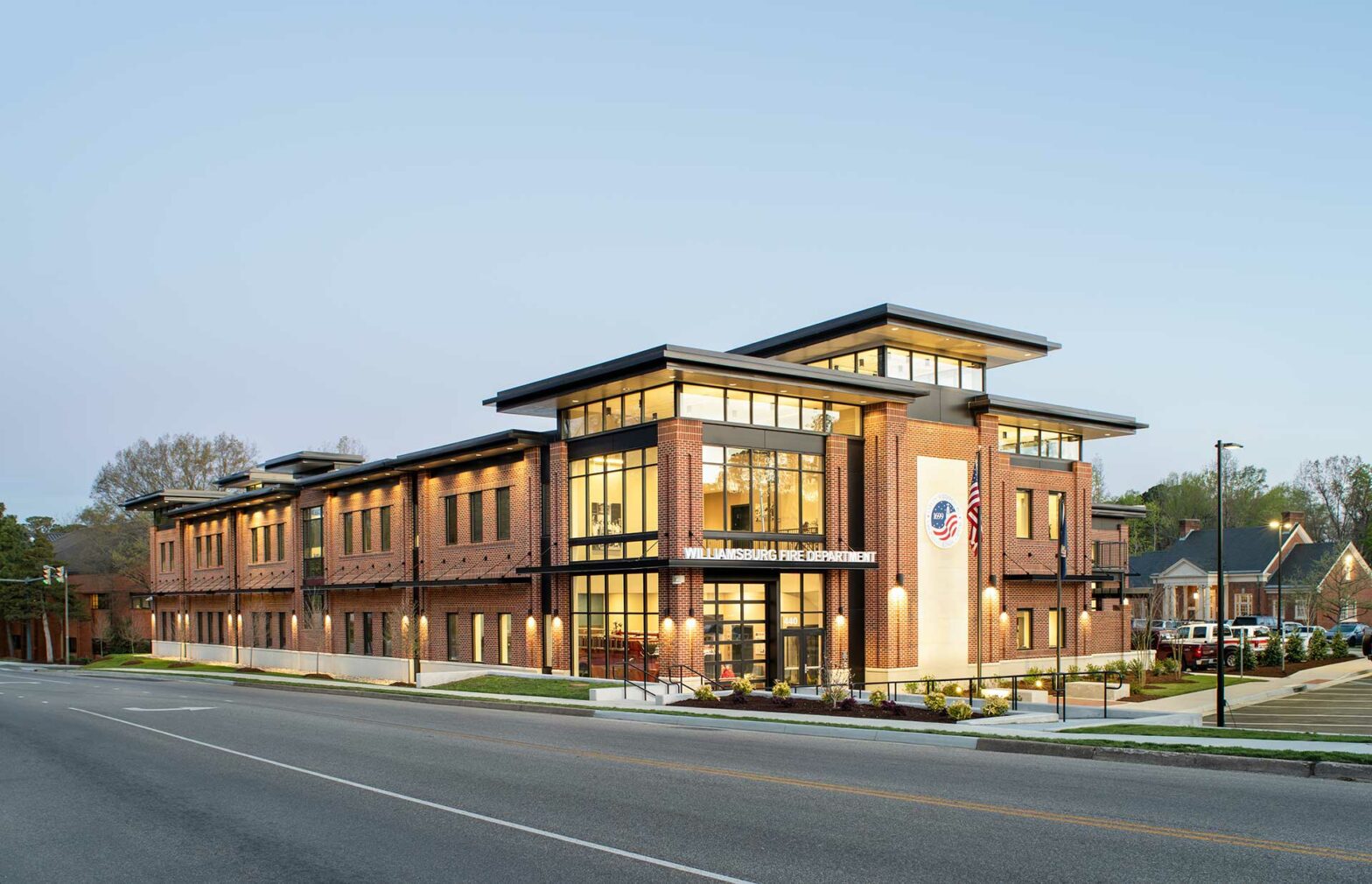
On the Williamsburg Fire Station project, delivered using Design–Build, the team navigated significant material cost escalation and supply chain challenges. To maintain schedule and budget alignment, early release packages—such as structural steel—were issued at approximately 60% design. While this approach required additional coordination later, it allowed critical materials to be secured and kept the project on track, ultimately supporting timely occupancy for the fire department.
As the design continued to be refined, elements within the early package required adjustment to fully align with the Owner’s design expectations, resulting in targeted redesign and coordination. In this case, aspects of the Owner’s design intent were not fully realized within the early package, which required the team to revisit and refine those elements as the project progressed. When this misalignment became apparent, the team’s shared commitment to the project and a collaborative, solutions-oriented approach allowed for effective coordination and redesign to realign with the Owner’s vision.
This reflects a key aspect of the Design–Build delivery method—enabling early, proactive action while also requiring careful alignment, as decisions made earlier in the process can carry through and influence outcomes later in the project.
Construction Manager at Risk (CMAR): Collaboration with Structure
Where it excels:
- Qualification-based selection of the Architect, paired with a qualifications-led Contractor selection that may include cost components such as preconstruction fees or GMP approach
- Contractor involvement early in design decisions
- Guaranteed Maximum Price (GMP) established during design
- Value engineering occurs proactively during design
- Open-book subcontractor bidding maintains competition
- Often results in the highest quality outcome for the best overall value
What to consider:
- Requires a true team-based approach
- Includes a pre-construction services fee
- Total cost may be slightly higher than DBB
What this looks like in practice:
On the Henrico County Family Services Building currently progressing through CMAR selection and early design, the benefits of early contractor involvement are already shaping the project’s trajectory. Through close collaboration with the Owner and design team, the Construction Manager is actively informing decisions around cost, constructability, and phasing—bringing real-time feedback into the design process rather than reacting after bidding.
This includes evaluating systems, coordinating site constraints, and aligning scope with budget as the design develops. As the team works toward establishing a Guaranteed Maximum Price (GMP), this approach is helping to reduce uncertainty, identify potential challenges early, and support more confident decision-making.
For a project serving an active community, this level of coordination is critical—positioning the project for a more predictable construction phase with fewer disruptions and better overall outcomes.
A Reality Check: Delivery Method Shapes Behavior
- DBB emphasizes competition and owner control of the design and decision-making process.
- Design–Build emphasizes efficiency and single-point responsibility.
- CMAR emphasizes collaboration and early alignment.
The Bottom Line
Success in public projects comes from selecting the right delivery method for the project—not defaulting to the most familiar one. With the right approach and the right team working together, local governments can deliver projects that serve their communities effectively and stand the test of time.